I’ve written before about the importance of language revitalization and some of the efforts made towards it. But what does it look like when those efforts work? Today, I give you the spooky stories (ok not really) of four languages brought back to life—also called revived languages.
There is a question of whether any of these languages were ever really dead. Despite reports of the contrary, none of these languages are confirmed to have zero speakers at a given time. However, all four languages experienced a decline in transmission (when a language is passed down between generations) at a large scale. This got to the point where there are no native speakers (people who know the language from infancy/early childhood), but some second-language speakers were still around.
Nonetheless, each of these four revived languages declined due to physical and cultural genocide. Grassroots efforts were used to promote and revitalize each of them. And all of them are evidence of how a language can survive if enough people want it to.
Wampanoag

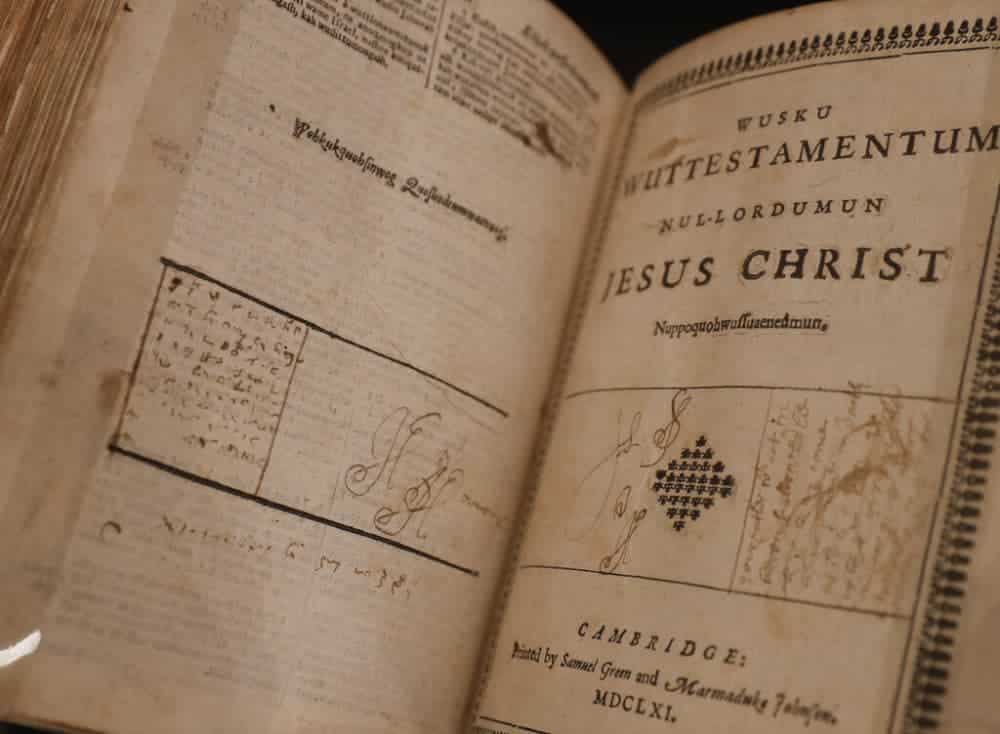
As is the case for many Indigenous languages, Wampanoag (Wôpanâak) experienced decline to the point of extinction due to illness (smallpox, measles, etc.), war with English colonizers and later Americans (especially King Philip’s War in 1675), and loss of land causing speaker communities to shrink. However, today, Wampanoag has the unique honour of being the first North American Indigenous revived language.
In 1993, jessie ‘little doe’ baird founded the Wôpanâak Language Reclamation Project (WLRP). She began pursuing reclamation of her language after receiving a “sacred message” while dreaming three nights in a row. In collaboration with MIT linguist Kenneth Locke Hale, she established ‘an idealized spelling system’ based on preserved documents written in the original Wôpanâak including handwritten deeds, wills, petitions, etc. Baird and Hale made sound change comparisons with sister languages from the Algonquian family ‘to ensure a conservative linguistic foundation’.
Baird and Wampanoag tribal citizens from the Mashpee, Aquinnah, Assonet, and Herring Pond communities developed instructional materials, learned to speak the language, and reintroduced it to everyday use. Baird’s daughter, Mae, became the first native speaker of the revived version of Wôpanâak. Since then, other children and adults have successfully learned the language.
Today, revitalization of Wôpanâak continues through ‘educational programs, language classes, and cultural initiatives’.
Cornish

Like Wôpanâak, the Celtic language Cornish (Kernewek) was pushed out of common use by the English language. The extinction myth of Cornish credits Dolly Pentreath, a fishwife who died in 1777, as the last living speaker of Cornish pre-revival. However, today, this is understood as a promotional tactic for the revival in the early 20th century.
This ‘revival’ movement began with the publication of A Handbook of the Cornish Language by Henry Jenner. However, mostly academics were interested in Cornish for the first few decades. Since then, mainstream education of Cornish has increased.
The Cornish Language Office reports 400 advanced Cornish speakers, 2000 conversational speakers, and several thousand “casual” speakers. Anyone who wants to learn to speak Cornish have several options for classes. The organization Go Cornish helps install Cornish classes in primary schools and offers language learning materials including apps and classes for learners of all ages. During Covid-19 lockdowns, Kowethas an Yeth Kernewek (Cornish Language Fellowship) experienced a surge in sign-ups for online Cornish classes.
Maori

By the 1960s in New Zealand, te reo Maori had declined to the point that less than 20% of Maori children were fluent in the language. Early 20th century urbanization and development established English as the dominant language in New Zealand. Additionally, Maori children were forced to attend English-language schools – similar to the residential schools of Canada – where they were punished if they spoken their native tongue.
By the latter half of the 20th century, te reo Maori was stereotyped as a ‘backward’ language. In the 1970s, troubled by this decline, Sir Apirana Ngata and other Maori leaders and linguists began to advocate for Maori language and culture.
In 1982, the first ‘language nests’, or Kohanga Reo, were established in New Zealand pre-schools. There, children were paired with Maori elders to gain knowledge of te reo. The nests nurtured a native fluency among the children. Almost as a result, parents began learning the language alongside their children. Then Te Ataarangi introduced adult learning methods of te reo.
In 1987, the New Zealand government passed the Maori Language Act. This law recognized Maori as an official language of New Zealand.
These programs continue today. People who were in language nests as children now have their own children or grandchildren enrolled. And in 2004, the New Zealand government launched Whakaata Maori (formerly Maori Television). The channel offers dedicated programming in Maori. This contributes to the promotion of Maori through easily accessible media.
Livonian

Livonian is a Finno-Ugric language associated with the Livonian people and spoken in present-day Latvia. Livonians number approximately 200 people, making it the smallest ethnic minority in Europe.
In Medieval times, as many as 30,000 people spoke Livonian. Livonians preserved their language while German and Russian forces controlled their native territory. But during the 20th century and Latvia becoming a Soviet state, many Livonians and Latvians were deported or executed. Joseph Stalin was threatened by any sense of national identity. This included linguistic identity.
After the Soviet Union dissolved in 1991, Latvia became an independant nation again. However, the damage was done. Livonians had dispersed and married ethnic Latvians who they did not share the Livonian language with. In 2013, Grizelda Kristiņa, the last native speaker of Livonian, died. After her death, only a handful of people spoke any Livonian. During the existence of the Soviet Union, parents didn’t speak Livonian to their children out of fear of punishment. Thus, transmission of Livonian halted.
After Kristiņa’s death, interest in reviving the language grew. The Latvian government and NGO’s funded Livonian language courses. Today, people are trying to raise their children with the language. Other efforts to promote the language are NeiUm, a music project targetted towards young people that combines traditional Livonian music and lyrics with electronica, and the biannual Livonian Song Festival.
As of 2021, less than 30 Livonians speak their language, but when you consider it was extinct just over a decade ago, this revived language has expierenced a huge turnaround.
Resources:
- Project History | WLRP Home
- Why Cornwall is resurrecting its indigenous language | BBC
- Go Cornish for Primary Schools – Go Cornish
- All Learners – Go Cornish
- Te Reo Māori: The Revival of a Language and a Culture | Medium
- Whakaata Maro | Wikipedia
- Europe’s language that few speak | BBC
Leave a Reply